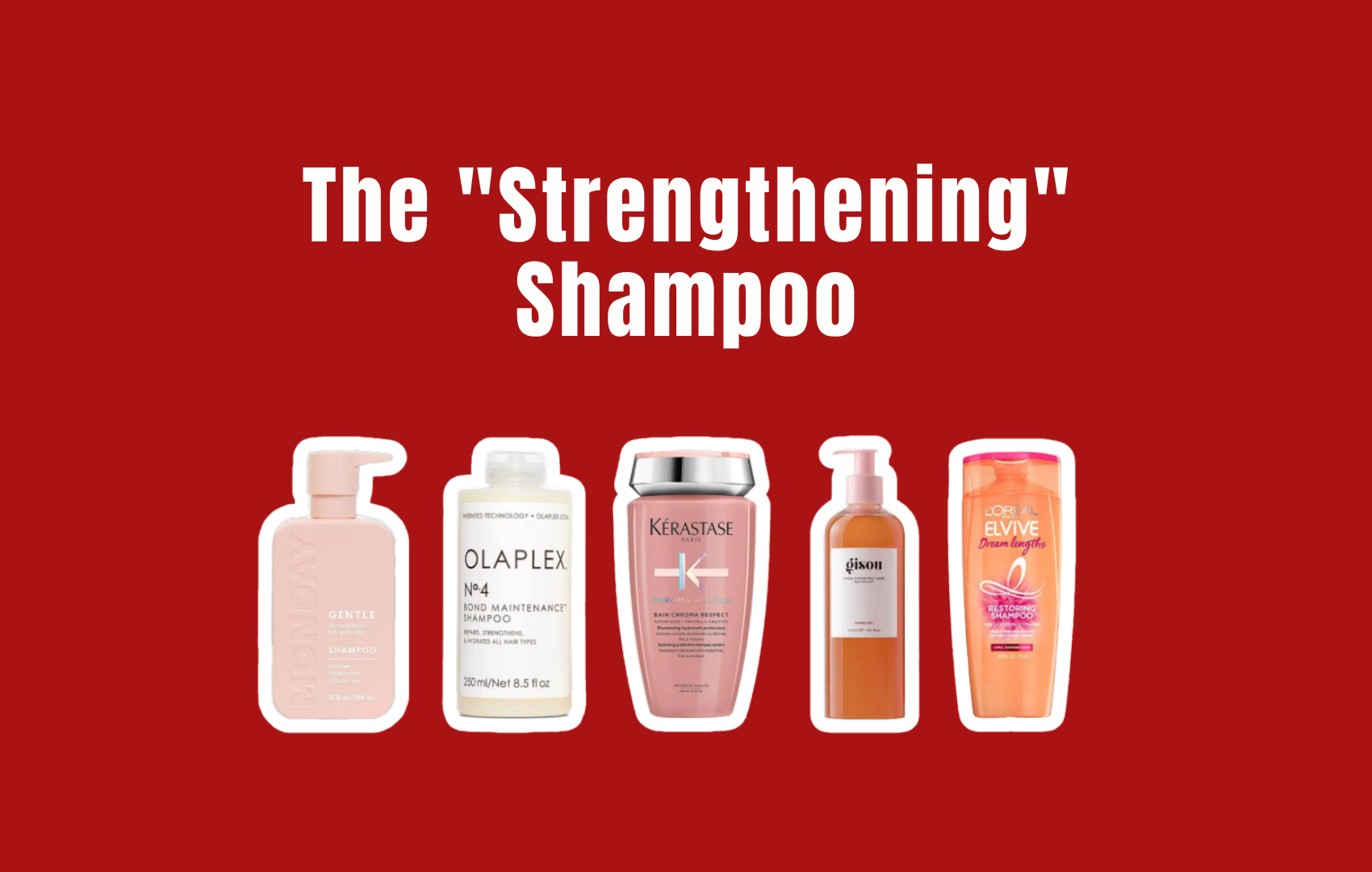
The word "strengthening" on a shampoo bottle is doing a lot of work. It implies your hair will come out of the shower more resilient, more protected, less prone to breakage. It implies the formula is working in your hair's interest.
Some of them are. A lot of them aren't.
The problem is that "strengthening" is not a regulated claim. There is no standard for what a shampoo must contain or prove to use that word. Which means a shampoo can call itself strengthening while containing ingredients that actively strip moisture, disrupt the scalp barrier, or coat the hair shaft in a way that makes it feel strong temporarily while making it more brittle over time.
Here are the ingredients most commonly hiding behind the "strengthening" label and what they're actually doing to your hair.
The Ingredients to Watch
Ingredient 1
Sulfates (Sodium Lauryl Sulfate / Sodium Laureth Sulfate)
Avoid for Dry or Damaged HairSulfates are surfactants — they're what makes shampoo lather. Sodium Lauryl Sulfate (SLS) is the most aggressive. Sodium Laureth Sulfate (SLES) is slightly milder but still a strong cleanser. Both are effective at removing oil and buildup, which is exactly the problem.
For hair that's already dry, chemically processed, or prone to breakage, sulfates strip the natural oils that protect the cuticle. The result is hair that feels "clean" immediately after washing but becomes progressively drier and more brittle with repeated use. The "strengthening" claim on the front of the bottle doesn't change what the surfactant is doing on the back.
Look for: sodium lauryl sulfate, sodium laureth sulfate, ammonium lauryl sulfate, ammonium laureth sulfate.
Ingredient 2
Isopropyl Alcohol and Short-Chain Alcohols
Drying: Check the Position in the ListNot all alcohols are drying. Fatty alcohols like cetyl alcohol and stearyl alcohol are actually conditioning. But short-chain alcohols (isopropyl alcohol, SD alcohol, alcohol denat) evaporate quickly and take moisture with them.
They appear in shampoos to help other ingredients penetrate or to give a lightweight, non-greasy feel. In small amounts near the bottom of the ingredient list, they're usually fine. When they appear in the first half of the list, they're present in meaningful concentrations and will contribute to dryness over time.
Look for: isopropyl alcohol, SD alcohol 40, alcohol denat, ethanol listed high in the formula.
Ingredient 3
Formaldehyde-Releasing Preservatives
Scalp Irritant — Disrupts BarrierSeveral common preservatives release small amounts of formaldehyde over time to prevent microbial growth. They're effective preservatives. They're also known scalp irritants that can disrupt the skin barrier, cause contact dermatitis, and in sensitive individuals, trigger inflammation that affects the follicle environment.
A compromised scalp barrier doesn't just cause irritation — it affects the health of the follicles that produce your hair. "Strengthening" a strand while irritating the scalp it grows from is a contradiction the label won't mention.
Look for: DMDM hydantoin, imidazolidinyl urea, diazolidinyl urea, quaternium-15, bronopol (2-bromo-2-nitropropane-1,3-diol).
Ingredient 4
Polyquaternium Compounds (High Concentration)
Buildup Risk — Context DependentPolyquaternium compounds are conditioning agents that give hair slip, reduce static, and make it feel smooth and manageable. In a conditioner or leave-in, they're useful. In a shampoo marketed as "strengthening," they're often doing the cosmetic work of making hair feel stronger without addressing the underlying structure.
The bigger issue is buildup. Polyquaternium compounds are positively charged and bond to the negatively charged hair shaft. Over time, with repeated use and no clarifying step, they accumulate. The result is hair that feels heavy, loses volume, and stops responding to other treatments — because the buildup is blocking them.
Look for: polyquaternium-7, polyquaternium-10, polyquaternium-11 listed high in the formula.
Ingredient 5
Dimethicone and Non-Water-Soluble Silicones
Coating, Not StrengtheningSilicones make hair feel smooth, look shiny, and behave as though it's in better condition than it is. Dimethicone is the most common. It coats the hair shaft with a thin film that reflects light and reduces friction — which is why hair feels "stronger" and looks healthier immediately after use.
The problem is that dimethicone is not water-soluble. It doesn't wash out with regular shampoo. It accumulates with every wash, eventually creating a barrier that blocks moisture and protein treatments from penetrating the hair shaft. The hair looks better while getting worse.
If your shampoo contains dimethicone and you're not clarifying regularly, you're coating your hair in a layer that prevents anything else from working.
Look for: dimethicone, cyclopentasiloxane, cyclomethicone, amodimethicone (bonds more strongly and is harder to remove).
Ingredient 6
Fragrance (Parfum)
Scalp Sensitizer — Undisclosed Ingredients"Fragrance" or "parfum" on an ingredient list is a single entry that can represent dozens of undisclosed chemical compounds. Fragrance is one of the most common causes of contact dermatitis and scalp sensitization. For people with sensitive scalps, eczema, or psoriasis, it's a frequent trigger.
It also tells you nothing. A shampoo can list "fragrance" and contain any combination of hundreds of permitted fragrance chemicals, some of which are known allergens. The word "natural fragrance" doesn't change this — it just means the allergens came from a plant source.
Look for: fragrance, parfum, natural fragrance, aroma — especially if you have a sensitive or reactive scalp.
What "Strengthening" Actually Requires
For a shampoo to genuinely support hair strength, it needs to do at least one of the following:
- Deliver hydrolyzed proteins (keratin, wheat, silk, rice) small enough to penetrate the hair shaft and temporarily fill structural gaps
- Contain amino acids that bond to the cortex and reinforce the internal structure
- Include panthenol (provitamin B5), which penetrates the shaft and improves elasticity
- Use a gentle enough surfactant system that it doesn't strip the moisture it's supposed to be protecting
None of that requires the word "strengthening" on the label. And the word "strengthening" on the label doesn't require any of that.
How to Read a Shampoo Label
| What to Look For | What to Avoid |
|---|---|
| Hydrolyzed keratin, wheat protein, silk protein | Sodium lauryl sulfate (SLS) as first or second surfactant |
| Panthenol (provitamin B5) | Dimethicone without a clarifying routine |
| Amino acids (arginine, cysteine) | DMDM hydantoin, quaternium-15 (formaldehyde releasers) |
| Gentle surfactants: cocamidopropyl betaine, sodium cocoyl isethionate | Isopropyl alcohol or SD alcohol listed in the first half |
| Fatty alcohols: cetyl, stearyl, cetearyl alcohol | Polyquaternium compounds without regular clarifying |
The Bottom Line
"Strengthening" is a marketing claim, not a formulation standard. The ingredients that actually strengthen hair — hydrolyzed proteins, amino acids, panthenol — are present in some shampoos and absent in others, regardless of what the front label says.
The ingredients that undermine hair health — aggressive sulfates, non-water-soluble silicones, formaldehyde-releasing preservatives — are also present in some "strengthening" shampoos, because nothing stops them from being there.
Read the back of the bottle. The front is advertising.