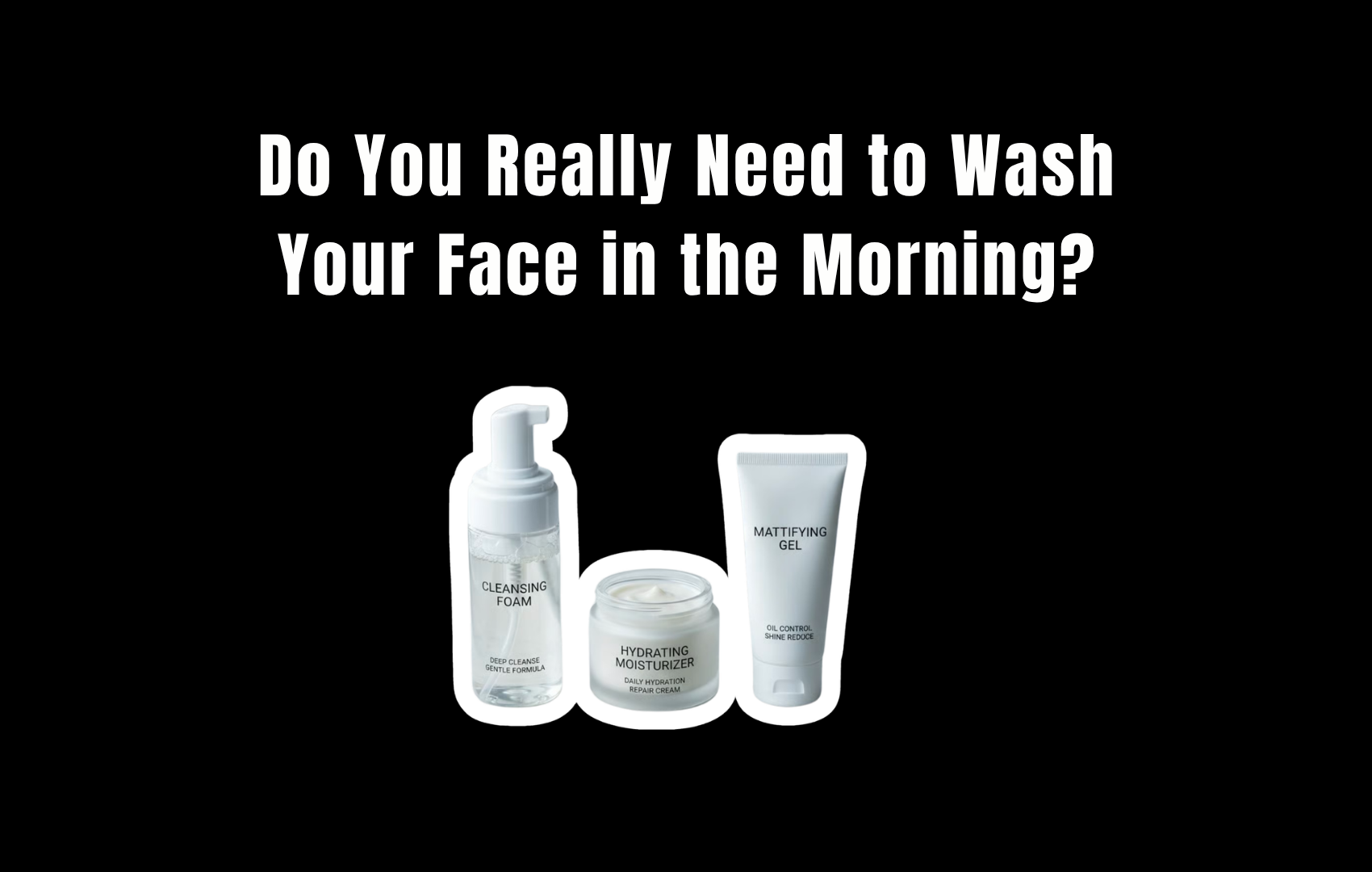
There is a step in almost every skincare routine you have ever been sold that runs on pure inertia. You wake up, you walk to the sink, and you wash your face. Nobody questions it, because washing is what you do with a face. But stop for a second and ask the obvious question that the industry would really prefer you did not. What, exactly, are you washing off? You slept on a clean pillowcase, in a clean bed, doing nothing. If you did your skincare the night before, your face went to sleep clean. Eight hours later it is, at most, a little oily. That is not dirt. That is your skin doing its job.
What Actually Happens to Your Face Overnight

While you sleep, your skin is not getting dirty. It is repairing. It rebuilds its barrier, the outermost layer of lipids and cells that holds water in and keeps irritation out. It produces sebum, the natural oil that is not your enemy but your first line of defense. By morning your face is coated in a thin layer of exactly the protective material it spent all night making. The overnight products you may have applied are largely absorbed or sitting right there on top, still working.
Then you wash it all off with a foaming cleanser at seven in the morning, and you start the day by stripping away the barrier your skin just spent eight hours building. For a lot of people that is the single most counterproductive thing they do to their skin, and they do it every single day because a routine told them to.
Why the Routine Has a Morning Cleanse in It Anyway
Follow the incentive. A skincare brand that sells a cleanser wants you using that cleanser as many times a day as possible, because the bottle empties twice as fast when you wash morning and night. A routine with more steps is a routine that sells more products, full stop. The morning cleanse is not in your regimen because your skin was crying out for it. It is in there because a twice-daily habit is worth roughly double a once-daily one to the company that sold you the tube.
This is the quiet pattern behind a lot of routine advice. Every added step is framed as essential self-care, and most of them are also, conveniently, another product. The question is never whether a step feels virtuous. It is whether your skin can tell the difference. For the morning cleanse, a lot of people would fail that test blind.
Stripped Skin Fights Back, and You Buy More to Fix It
Here is the loop that makes this so profitable. You wash your face morning and night with something that leaves it squeaky and tight. Squeaky and tight feels clean, so you think it is working. But that tight feeling is your barrier being stripped, and stripped skin does two things. If it is dry, it gets flaky and irritated, so you buy a richer moisturizer. If it is oily, it panics and overproduces oil to compensate, so you buy more cleanser and something mattifying, and the cycle tightens.
A surprising number of people who believe they have oily or sensitive skin have, in part, a routine that manufactured it. Over-cleansing is one of the most common causes of the exact problems people then spend money trying to solve. The industry sells you the strip and then sells you the repair, and both halves are billed as taking good care of yourself.
Who Genuinely Should Wash in the Morning

This is not a rule that you must never cleanse before noon, and honesty is the whole point of this site, so here are the people for whom a morning wash is reasonable:
- If you have genuinely oily or acne-prone skin and you wake up slick, a gentle cleanse can help.
- If you use a prescription retinoid or other actives that you would rather not layer sunscreen directly on top of, a light morning wash makes sense.
- If you sweat heavily overnight or your pillowcase is not clean, wash.
- If you simply feel greasy and hate it, that is a valid enough reason on its own.
The point is not that morning cleansing is forbidden. It is that it should be a decision you made about your own face, not a default someone installed in your routine so a bottle would run out sooner.
What to Actually Do Tomorrow Morning
The lowest-risk version costs nothing and takes one change. Tomorrow, skip the cleanser. Splash your face with lukewarm water, or just go straight to your moisturizer and sunscreen on bare skin. Then watch how your face actually behaves by midday, not how it feels in the first two minutes. Give it a week, because skin takes a few days to recalibrate after you stop stripping it.
If you are less oily, calmer, and less tight by day four, that is your answer, and you have just deleted a product and a step from your life at the same time. If you genuinely miss it, wash, but use something gentle and non-foaming and know why you are doing it. Either way you have done the one thing the routine industry never wants you to do, which is to test whether a step earns its place instead of trusting that it does. Most of your routine could stand that test. Not all of it would pass.