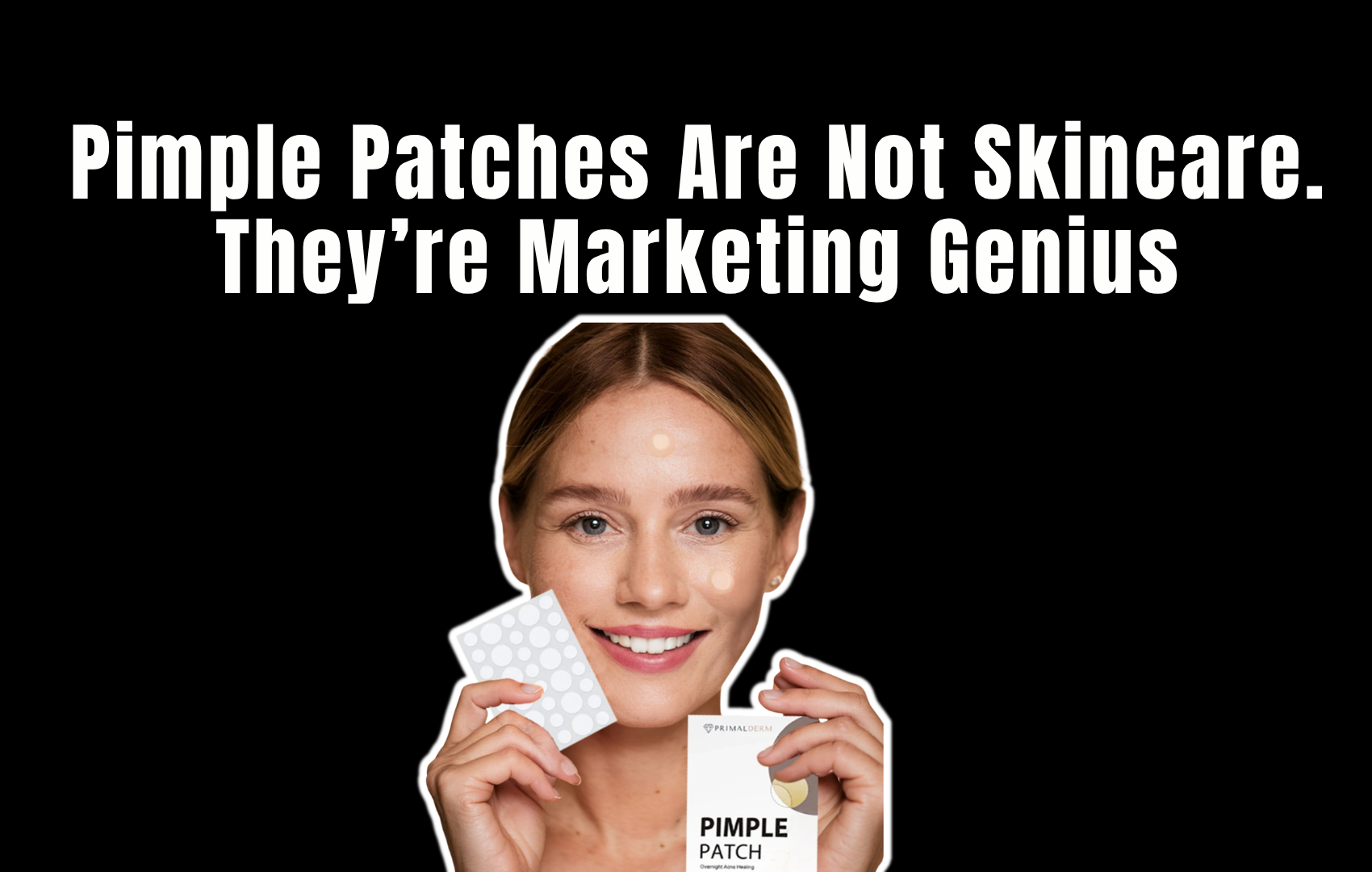
Pimple patches might be one of the most aggressively overmarketed skincare products of the past five years. According to TikTok, these tiny stickers can apparently erase acne overnight, heal your skin while you sleep, and somehow make breakouts look "cute" at the same time. Brands now sell them in stars, hearts, clouds, glitter, and pastel colors — like acne suddenly became a fashion accessory instead of a skin condition people actually want gone.
And consumers are absolutely buying into it. The global pimple patch market was worth hundreds of millions of dollars in 2023 and is projected to keep growing rapidly over the next decade. One report estimated the category could surpass $3.6 billion by 2032.
Which is honestly incredible considering most pimple patches are essentially glorified hydrocolloid bandages.
The Industry's Favorite Lie: "Overnight Acne Cure"
The reality is much less exciting than skincare TikTok wants people to believe. Hydrocolloid dressings have existed in wound care since the 1980s. Beauty brands simply realized they could cut them into tiny circles, put them in aesthetically pleasing packaging, and suddenly consumers would treat them like revolutionary skincare technology.
Hydrocolloid works by absorbing fluid and protecting damaged skin. That's it. When people peel off a patch in the morning and see white gunk inside, the patch is mostly absorbing oil, pus, and moisture from the surface of the pimple. It is not "pulling toxins out of your skin" — no matter how dramatic the TikTok before-and-after video looks.
The biggest misconception is that pimple patches actually "treat acne." They do not. Dermatologists consistently say they work best on whiteheads and surface-level pimples that have already come to a head. If you have painful hormonal acne or deep cystic breakouts under the skin, sticking a star-shaped sticker on top of it is not going to magically flatten it overnight.
But of course brands rarely explain that clearly — because "this only works on certain pimples" doesn't create viral content.
How Acne Became An Accessory
What's actually fascinating is how brands transformed pimple patches from discreet acne treatment into a social identity.
Earlier acne products were designed to hide blemishes. Then brands like Starface realized something genius: younger consumers were more likely to engage with acne products if they looked playful instead of clinical. Suddenly people were wearing neon stars across their face in selfies and "Get Ready With Me" videos — like acne became part of the outfit.
And the strategy worked unbelievably well. Videos mentioning "best pimple patch" generated hundreds of millions of TikTok views, while Starface reportedly sells around 200 packs of patches per minute.
That's why brands now compete on aesthetics more than science. Hero Cosmetics markets "invisible" patches for discreet wear. Rhode turned acne patches into minimalist beauty accessories. Peace Out Skincare and ZitSticka sell premium "microdart" technology that sounds significantly more futuristic than it actually is.
At some point, the category stopped being about acne and started becoming about aesthetic participation in skincare culture.
The Real Reason Pimple Patches Help
Ironically, the biggest reason pimple patches actually work has nothing to do with advanced skincare science.
They stop people from touching their face.
Dermatologists repeatedly point out that picking acne worsens inflammation, spreads bacteria, increases pigmentation, and creates scarring. A pimple patch acts more like a physical barrier than a true acne treatment. In many cases, the breakout improves simply because the person finally leaves it alone for eight hours.
Which means the patch itself often is not the miracle. The miracle is consumers temporarily stopping themselves from attacking their own skin in the bathroom mirror.
So… Do Pimple Patches Actually Work?
Yes. But nowhere near as dramatically as the internet wants people to believe.
Products like Hero Cosmetics Mighty Patch or COSRX Acne Pimple Master Patch can absolutely help flatten whiteheads, absorb surface fluid, and reduce irritation temporarily. But they are not curing acne. They are not solving hormonal breakouts. And they are definitely not replacing actual dermatology treatments.
| What Brands Claim | What They Actually Do |
|---|---|
| "Overnight acne cure" | Absorbs surface fluid from open whiteheads |
| "Pulls toxins from skin" | Absorbs oil, pus, and moisture via hydrocolloid |
| "Works on all acne" | Only effective on surface-level, open pimples |
| "Microdart technology" | Tiny dissolving needles that deliver salicylic acid — limited evidence on depth |
| "Heals skin while you sleep" | Protects from bacteria and picking; does not treat root cause |
At the end of the day, pimple patches are basically extremely well-marketed wound dressings wearing cute packaging and a strong social media strategy.
Which honestly might perfectly summarize modern beauty culture altogether.