"Medical-grade." It's on the packaging of serums sold in dermatologist offices, med spas, and increasingly, directly to consumers online. It implies clinical rigor. It implies something stronger, more effective, more legitimate than what you'd find at a pharmacy. It implies, above all, that there is a regulatory category called "medical-grade" that these products belong to.
There isn't. The term has no legal definition in the United States, the EU, or most other major markets. Any brand can put "medical-grade" on a product. No approval is required. No testing threshold must be met. No regulatory body oversees the claim. It is, in the most precise sense of the word, made up.
What the FDA Actually Regulates
In the US, the FDA classifies products as either cosmetics or drugs. Cosmetics are products applied to the body to cleanse, beautify, or alter appearance — they don't require pre-market approval. Drugs are products that affect the structure or function of the body — they require clinical trials, safety data, and FDA approval before sale.
Most skincare sits firmly in the cosmetics category. A moisturizer is a cosmetic. A retinol serum sold over the counter is a cosmetic. A sunscreen is an OTC drug. Prescription tretinoin is a drug. "Medical-grade" is none of these things — it's a marketing descriptor that exists entirely outside the regulatory framework.
The Claims That Don't Hold Up
Myth 1
"Medical-grade products have higher active concentrations"
Verdict: Sometimes True, Never VerifiedSome brands selling under the "medical-grade" label do use higher concentrations of actives like retinol, niacinamide, or vitamin C. But there is no requirement that they do. The claim is self-reported. No independent body verifies that a "medical-grade" product contains what it says, at the concentration it claims, in a form that's actually bioavailable.
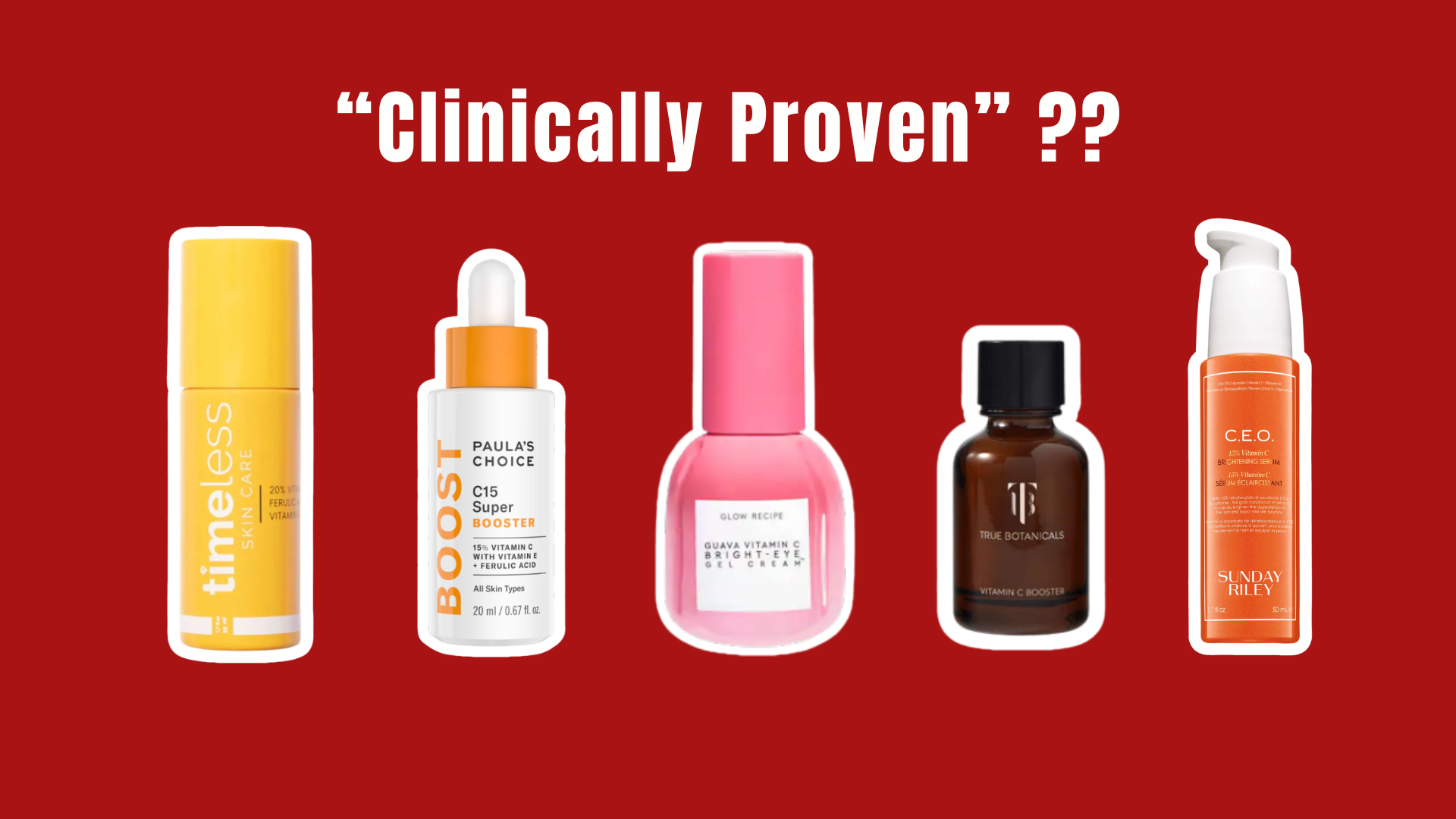
Meanwhile, brands like The Ordinary, Paula's Choice, and Naturium publish their concentrations openly and price their products at a fraction of what med-spa brands charge for equivalent formulas. The concentration advantage of "medical-grade" products is real in some cases and fictional in others — and you have no way to tell which without a lab.
Myth 2
"You can only get medical-grade products through a professional"
Verdict: A Distribution Strategy, Not a Safety RequirementBrands like SkinCeuticals, Obagi, and iS Clinical have historically sold through dermatologists and med spas only — but this is a deliberate distribution strategy, not a regulatory requirement. It creates scarcity, reinforces the medical association, and allows the brand to maintain higher price points by removing retail competition.
Many of these same products are now available directly online. The formula didn't change. The "professional-only" positioning was always about channel control, not clinical necessity.
Myth 3
"Medical-grade means it's been clinically tested"
Verdict: Clinical Testing Is Not RequiredCosmetics in the US do not require clinical trials before going to market. A brand can conduct its own in-house testing, commission a small consumer perception study, or do nothing at all — and still label the product "clinically tested" or "medical-grade." The FDA does not review cosmetic safety data before a product is sold.
When brands cite "clinical studies," read the footnotes. Studies funded by the brand, conducted on 20–30 participants, measuring self-reported outcomes like "skin feels smoother" are not the same as peer-reviewed, independent clinical trials. The language is designed to sound like the latter while being the former.
Myth 4
"The price reflects the quality of the formula"
Verdict: Price Reflects the Channel, Not the ChemistrySkinCeuticals C E Ferulic — one of the most cited "medical-grade" vitamin C serums — retails for around $182 for 30ml. It contains 15% L-ascorbic acid, 1% vitamin E, and 0.5% ferulic acid. That combination is well-documented in the literature. It's also a formula that independent brands have replicated at $30–$50 with comparable ingredient profiles.
The price of SkinCeuticals reflects its distribution model, its brand positioning, its dermatologist endorsements, and its marketing spend — not a proprietary formula that costs $182 to produce. The chemistry is not secret. The markup is.
What "Medical-Grade" Is Actually Selling You
The term works because it borrows authority from medicine without being subject to medicine's standards. It implies a doctor's endorsement without requiring one. It implies clinical evidence without providing it. It implies regulatory oversight that doesn't exist.
The dermatologist's office setting reinforces all of this. When you buy a serum in a clinical environment, surrounded by medical equipment and a professional in a white coat, the product absorbs that authority by proximity. The serum didn't change. The context did.
This isn't to say that all products sold as "medical-grade" are ineffective. Some are genuinely well-formulated. But the term itself tells you nothing about efficacy, safety, or value. It tells you about positioning. And positioning, in skincare, is almost always about price.