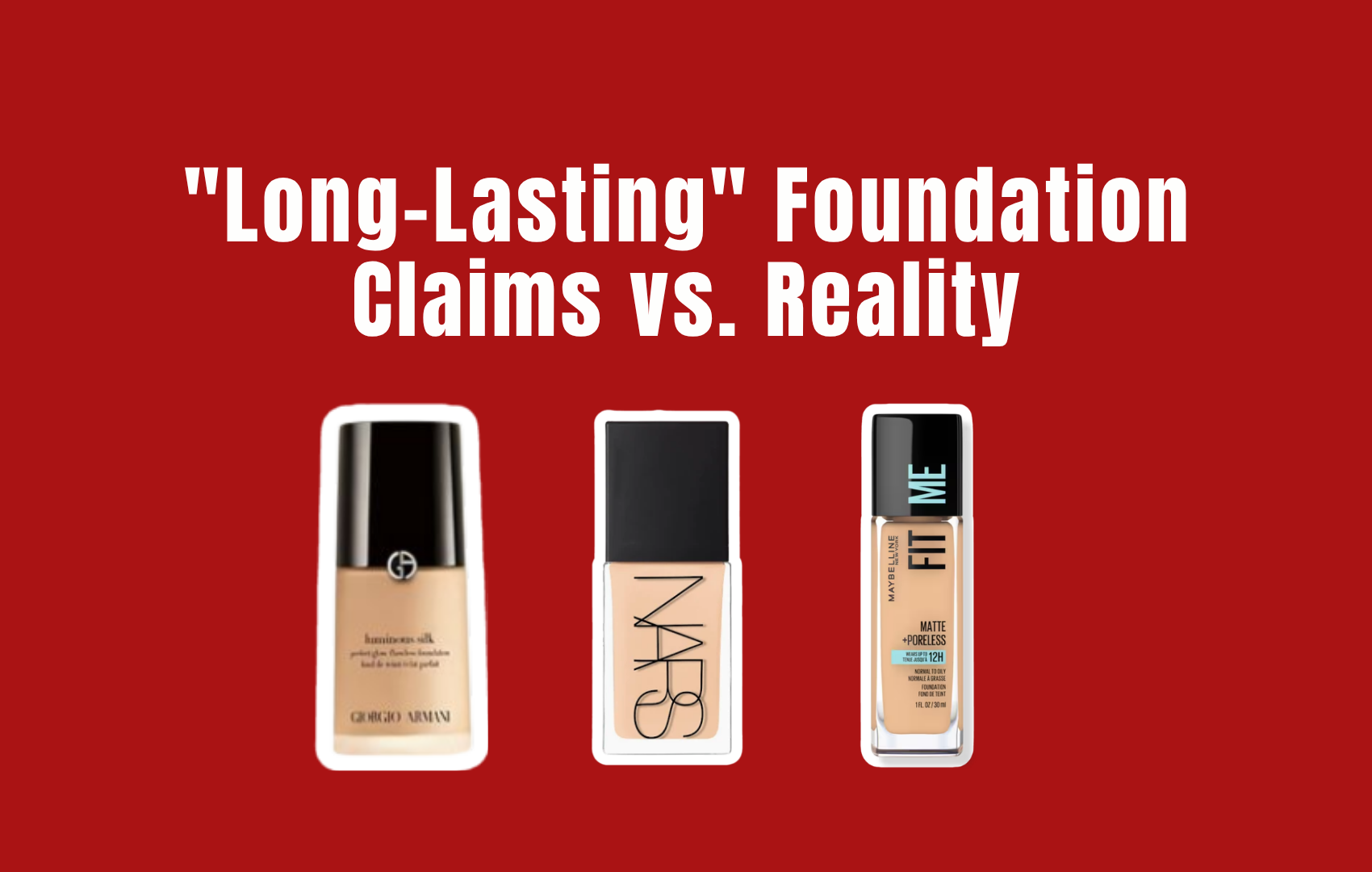
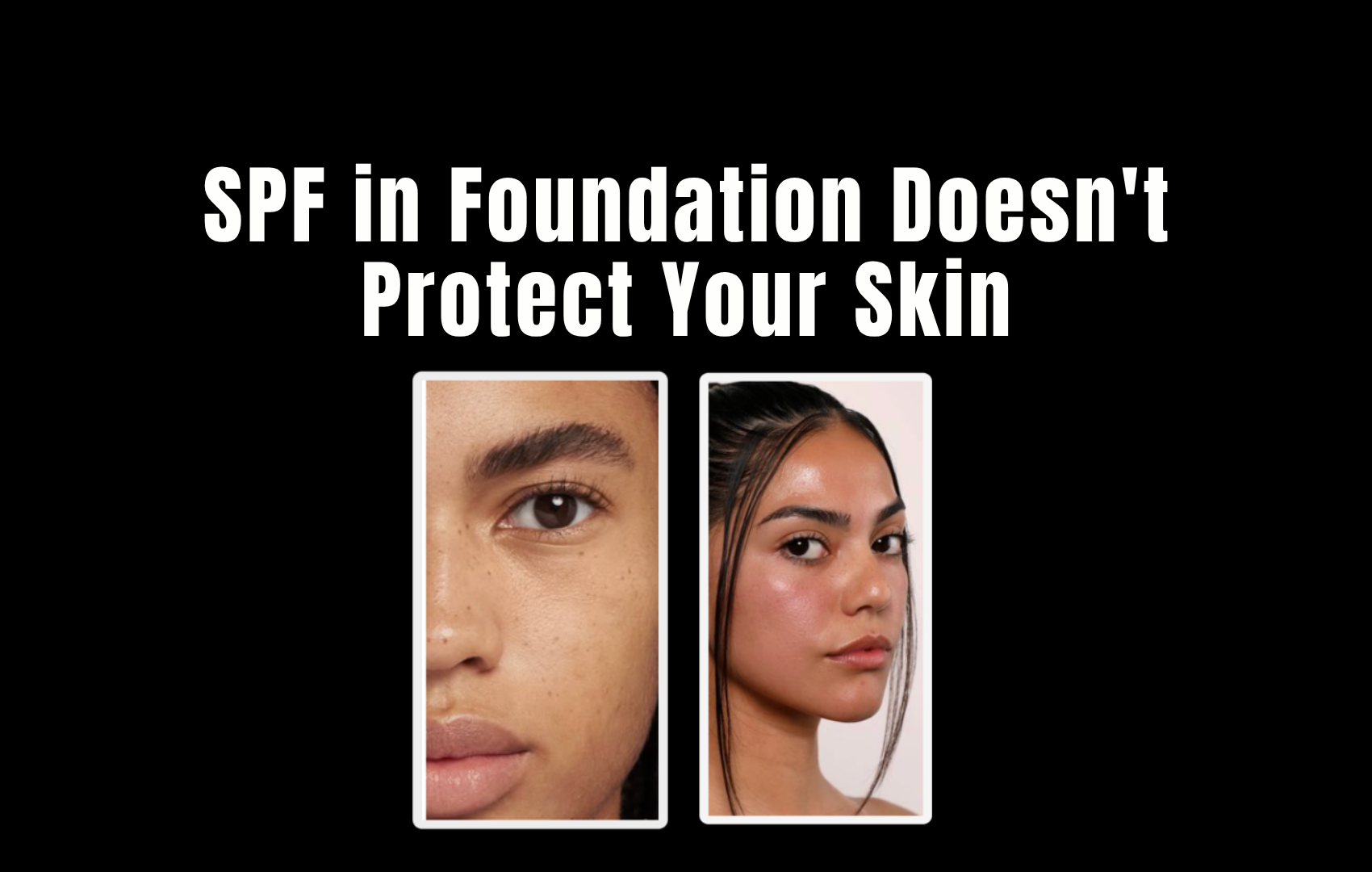
Every other foundation launch now comes with an SPF number on the label. SPF 15. SPF 30. SPF 50+. It sounds like a win — sun protection built right into your makeup routine. Brands market it as a two-in-one solution. Dermatologists, however, tell a different story. And the data backs them up.
Here's what's actually happening — broken down clearly.
Why the SPF Number on Your Foundation Is Misleading
- SPF is tested at 2mg per cm² of skin. That's about a teaspoon of product for your face alone. Nobody applies that much foundation. Studies show most people apply 20–50% of the amount needed to achieve the labeled SPF.
- At half the application, SPF 30 becomes roughly SPF 5. The math is not linear — SPF protection drops dramatically with under-application, which is the norm, not the exception.
- Foundation SPF is tested in isolation. The number on the label doesn't account for how the product interacts with your moisturizer, primer, or the fact that you're touching your face all day.
- "SPF 50" in a foundation is a marketing number, not a real-world promise. The FDA requires SPF testing on the finished product — but doesn't require brands to disclose that real-world application falls far short of test conditions.
What Brands Say vs. What the Research Shows
- Brand claim: "Full-day sun protection in one step." Reality: A 2011 study in the British Journal of Dermatology found that foundation wearers achieved only 40% of the labeled SPF under real-world conditions.
- Brand claim: "SPF 30 — no sunscreen needed." Reality: The American Academy of Dermatology explicitly states that makeup with SPF should not replace sunscreen. It supplements it at best.
- Brand claim: "Broad spectrum protection." Reality: Broad spectrum means UVA and UVB coverage — but the concentration of UV filters in most foundations is too low to provide meaningful UVA protection at typical application amounts.
- Brand claim: "Dermatologist tested." Reality: This phrase has no regulatory definition. It means a dermatologist looked at it at some point. It does not mean a dermatologist endorsed the SPF claim.
The loophole: SPF claims on cosmetics are regulated by the FDA as OTC drug claims — but enforcement is inconsistent, and brands are not required to disclose the application gap between lab testing and real-world use. The "SPF 30" on your foundation is legally accurate. It's also practically misleading.
What You Should Actually Do
- Apply a dedicated SPF underneath your foundation. A lightweight SPF 30–50 sunscreen applied before makeup is the only reliable way to get the protection the label promises.
- Don't skip reapplication. SPF degrades with UV exposure. Foundation SPF is not reapplied throughout the day — a standalone SPF powder or spray makes reapplication realistic.
- Treat foundation SPF as a bonus, not a strategy. If your foundation has SPF 30, great — it adds a small layer of protection on top of your sunscreen. It is not a replacement.
- Check the active ingredients. Look for zinc oxide or titanium dioxide (physical filters) or avobenzone/octinoxate (chemical filters) in the active ingredients list. If SPF is listed but no actives are disclosed, ask why.
The Bottom Line
SPF in foundation is not a scam — it does provide some protection. But the way brands market it implies a level of coverage that real-world application cannot deliver. Until brands are required to disclose the application gap, "SPF 30 foundation" will keep selling the idea of sun protection without the reality of it. Wear your sunscreen. Then put on your foundation.
Sources: British Journal of Dermatology (2011); American Academy of Dermatology SPF guidelines; FDA OTC Drug Monograph for Sunscreen Products. No brands were contacted for this article.