Every time someone gets flakes, the internet gives the same lazy advice: buy a stronger dandruff shampoo, scrub harder, exfoliate your scalp, use tea tree oil, clarify twice a week, detox your scalp like it committed a crime.
And sometimes, sure, it is dandruff.
But sometimes it is not. Sometimes those tiny white flakes, itchiness, tightness, redness, burning, and "my scalp hates every shampoo now" feelings are not classic dandruff at all. They are signs your scalp barrier is irritated, sensitized, or reacting to your routine.
That distinction matters because treating sensitive scalp like dandruff can make it worse. You think you are fixing flakes. You may actually be stripping an already angry scalp.
Fast Facts: Dandruff vs. Sensitive Scalp
- Dandruff is commonly linked to seborrheic dermatitis and an inflammatory reaction involving oil-rich areas of the scalp and Malassezia yeast. The AAD describes seborrheic dermatitis as a condition that can cause an itchy rash and flaky scalp, and says a dermatologist can diagnose it and tailor treatment.
- Sensitive scalp can show up as itching, burning, stinging, tightness, pain, or discomfort — sometimes with little visible rash. Dermatology literature describes sensitive scalp symptoms as burning, itching, trichodynia, and dysesthesia, with triggers including stress, topical products, and cosmetics.
- Scalp sensitivity is real. One worldwide study describes sensitive scalp as sensory scalp disorders triggered by non-pathogenic factors such as cosmetics, shampoos, heat, and stress.
- Itch is a major clue. A study on sensitive scalp found itch was the main symptom, and noted that product exposure can be relevant in people with sensitive scalp.
Why People Confuse Sensitive Scalp With Dandruff

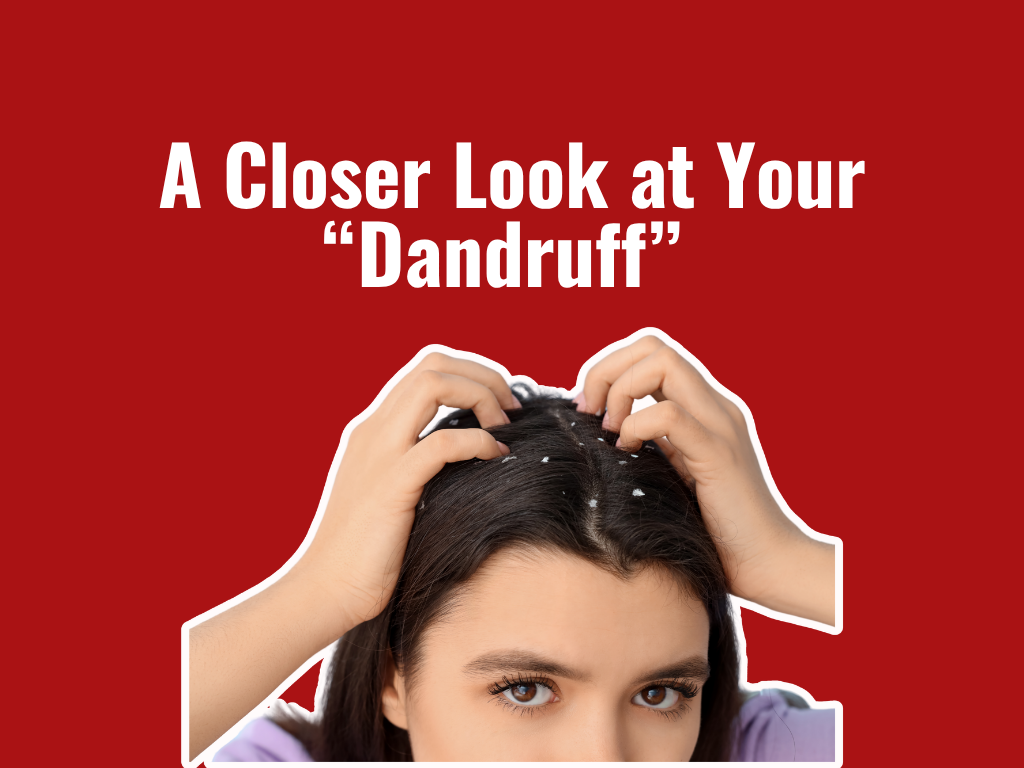
Both dandruff and sensitive scalp can produce flakes — but the underlying cause, and the correct treatment, are different.
Because both can flake. That is the trap.
Most people see flakes and immediately reach for anti-dandruff shampoo. But flakes can come from different problems: seborrheic dermatitis, dry scalp, irritation from hair products, contact dermatitis, psoriasis, eczema, over-cleansing, under-rinsing, or buildup from conditioners or styling products.
Dandruff-type flakes are often associated with oiliness and seborrheic dermatitis. Sensitive-scalp flakes are often smaller, drier, and paired with tightness, burning, stinging, or itch that gets worse after washing.
The scalp can look "fine" and still feel awful. Sensitive scalp is often subjective — the symptoms are felt even when the scalp does not show dramatic visible inflammation. Your scalp can be irritated even if it is not giving you a dramatic rash for proof.
The 4 Triggers That Make Sensitive Scalp Worse
Trigger 1
Strong Cleansing Shampoos
Shampoos with strong degreasing surfactants can be useful if you are very oily or have heavy buildup. But if your scalp barrier is already irritated, frequent use of aggressive cleansers may make the cycle worse.
Sulfates are not poison. They are effective detergents. The problem is fit. If a shampoo leaves your scalp tight, itchy, burning, or squeaky, it may be too stripping for you. Sensitive scalp is known to be triggered by topical products and cosmetics, including shampoos.
The issue is not "all sulfates are evil." The issue is using a heavy-duty cleanser on a scalp that needs calm, not punishment.
Trigger 2
Environmental Stress: Heat, UV, Sweat, and Weather Shifts
Your scalp is skin. Heat, sweating, UV exposure, cold wind, dry indoor air, and seasonal changes can all make a reactive scalp feel worse. Sensitive scalp literature specifically identifies heat and stress as triggers.
This is why some people say: "I changed nothing, but my scalp suddenly got itchy." Maybe the product did not change. Your environment did.
Trigger 3
Conditioner, Treatment, or Styling Product Left on the Scalp
A lot of people apply conditioner, hair mask, leave-in, oil, or styling cream too close to the roots. Then they rinse quickly. Then product sits in scalp folds and around follicles. That residue can cause itch, buildup, clogged follicles, flakes, greasy roots, and irritation.
A study on sensitive scalp found the sensitive-scalp group had significantly higher exposure to hair conditioners compared with those without sensitive scalp, and itch was the main symptom. That does not mean conditioner is bad. It means your scalp may not want a buttery hair mask sitting on it like a weighted blanket.
Trigger 4
Stress, Poor Sleep, and Immune Flare-Ups
Sensitive scalp literature lists stress and emotional factors as possible triggers. Stress can worsen itch, inflammation, scratching, and flare cycles. Then scratching damages the barrier more. Then the scalp gets itchier.
If your scalp flares every time your life becomes a calendar-shaped panic attack, that pattern is not imaginary. Stress can show up anywhere — face, scalp, gut, sleep.
Quick Check: Is It Dandruff or Sensitive Scalp?
| Clue | More Like Dandruff / Seborrheic Dermatitis | More Like Sensitive Scalp |
|---|---|---|
| Flake size | Larger, oilier, sometimes yellowish or greasy | Smaller, dry, powdery |
| Scalp feel | Oily, itchy, flaky | Tight, burning, stinging, itchy, sore |
| Trigger | Oiliness, Malassezia-related inflammation, chronic flares | Shampoos, heat, stress, fragrance, product residue |
| After washing | May improve with medicated shampoo | May feel worse after washing |
| Visible redness | Can happen | Can happen, but scalp may also look normal |
| Best first move | Anti-dandruff active if clear dandruff signs | Gentle routine and barrier repair |
This is not a diagnosis. If you have thick scale, bleeding, painful patches, hair loss, oozing, severe redness, or symptoms that keep coming back, see a dermatologist.
The Mistake: Using "Anti-Dandruff" Like a Weapon
A lot of people rotate through stronger and stronger shampoos: clarifying, anti-dandruff, scalp scrub, acid exfoliant, tea tree, sulfur, another anti-dandruff, panic. Then the scalp gets itchier. Then they assume the dandruff is "stubborn."
But if the real issue is sensitivity, you are not treating the root cause. You are escalating the irritation. Sometimes the fix is less heroic: stop scrubbing, stop over-washing, stop putting conditioner on the scalp, switch to a gentler shampoo, rinse more thoroughly, give your scalp a boring recovery period.
Boring is underrated. Boring is often how skin heals.
What to Do Instead
Fix 1
Switch to a Gentler Cleanser for Two to Three Weeks
Look for shampoos built around milder surfactants, often labeled gentle, sensitive scalp, fragrance-free, or sulfate-free. The key is not the front label. It is the wash feel.
Good signs: no burning, no squeaky-clean feeling, less itch after rinsing, scalp feels calm the next day.
Bad signs: instant itch, tight scalp, burning near the hairline, more flakes after washing, needing to scratch right after your shower.
Fix 2
Stop Applying Conditioner to the Scalp
Unless it is a scalp-specific product, conditioner belongs mostly on the lengths and ends. Keep heavy masks, oils, and leave-ins off the scalp while you are trying to calm it down. Conditioner exposure has been associated with sensitive scalp in at least one study.
Fix 3
Rinse Like You Mean It
Rinse around the hairline, behind ears, crown, nape, part line, and dense areas where hair traps product. Leftover product plus sweat plus oil is basically scalp soup. And not the good kind.
Fix 4
Avoid Scalp Scrubs During a Flare
Scrubs feel satisfying because they give you the illusion of doing something. But if your scalp is sensitive, gritty exfoliation may make irritation worse. If you truly need exfoliation for buildup, consider a gentle salicylic acid scalp product used sparingly, and stop if it burns or worsens itch.
Fix 5
Use Barrier-Supporting Scalp Care
Look for calming, barrier-supporting ingredients:
- Panthenol (provitamin B5)
- Niacinamide
- Glycerin
- Allantoin
- Colloidal oatmeal
- Bisabolol
- Madecassoside or centella
- Ceramide-supporting formulas
Tingle is not proof it works. Sometimes tingle is your scalp saying, "Respectfully, absolutely not."
Fix 6
Protect Your Scalp from UV and Heat
If your part line burns easily or your scalp gets itchy after sun exposure, use a hat, UPF scarf, or scalp sunscreen spray or powder that you actually tolerate. The scalp is skin. It can burn. It can react.
Fix 7
Fix the Schedule, Not Just the Shampoo
There is no morally superior wash schedule. There is only the schedule your scalp tolerates. The right frequency depends on oil production, sweat, exercise, styling products, hair density, scalp condition, and climate. Anyone telling everyone to wash once a week or every day with no context is selling certainty, not advice.
When It Really Is Dandruff
If your flakes are greasy, persistent, and paired with oily scalp and itch, dandruff or seborrheic dermatitis may be the issue. In that case, look for proven anti-dandruff ingredients — ketoconazole, selenium sulfide, zinc pyrithione, salicylic acid, coal tar — and use them correctly. A common mistake is rinsing medicated shampoo immediately. Many medicated shampoos need contact time, often a few minutes, depending on the label.
But again, do not guess forever. If nothing helps, get diagnosed.
Red Flags That Mean "See a Dermatologist"
- 🚩 Painful scalp or bleeding
- 🚩 Open sores, thick plaques, or pus/crusting
- 🚩 Sudden hair loss
- 🚩 Severe redness or burning that keeps returning
- 🚩 Flakes that do not improve with basic care
- 🚩 Symptoms spreading to eyebrows, ears, face, or neck
That could be seborrheic dermatitis, psoriasis, eczema, allergic contact dermatitis, folliculitis, fungal infection, or something else that needs specific treatment. Your scalp does not need another TikTok routine. It needs someone to actually look at it.
The Bottom Line
Not every flake is dandruff. And not every itchy scalp needs a stronger shampoo.
Sometimes the "dandruff" is your scalp telling you it is overwhelmed by stripping cleansers, residue, heat, stress, fragrance, scrubs, or too many scalp products pretending to be therapy.
So before you declare war on your flakes, ask better questions: Is my scalp oily or tight? Are the flakes greasy or powdery? Does washing help or make it worse? Am I applying conditioner to my roots? Did this start after a new shampoo, dye, treatment, or stressful week?
Because the goal is not to exfoliate your scalp into silence. The goal is to figure out why it is yelling.