Menopause changes your hair at the follicle, but most products never get that far. Here's what does.
Updated October 30, 2026 · 7 min read
You've handled the hot flashes, the 3 a.m. wake-ups and the mood swings. Now it's the meno-hair, and whenever you bring it up, you hear the same thing: it's just part of getting older.
While it's true that menopause changes your hair, that doesn't mean you just have to accept it. Maybe you started noticing hair in the drain this month and don't know where to start; or maybe you've already tried everything and spent more than you'd like to admit. The reason real solutions are hard to come by is that most of what's being sold isn't built for what menopause actually does to your hair.
Hair Science
As estrogen levels drop, two things happen under your scalp:
- hair follicles spend less time in the growth phase, and over time, more shift into the resting phase before eventually shedding
- the follicles themselves shrink, so each new hair grows in finer and shorter than the last
Hair products that don't target this follicle system are not properly formulated to support your hair journey.
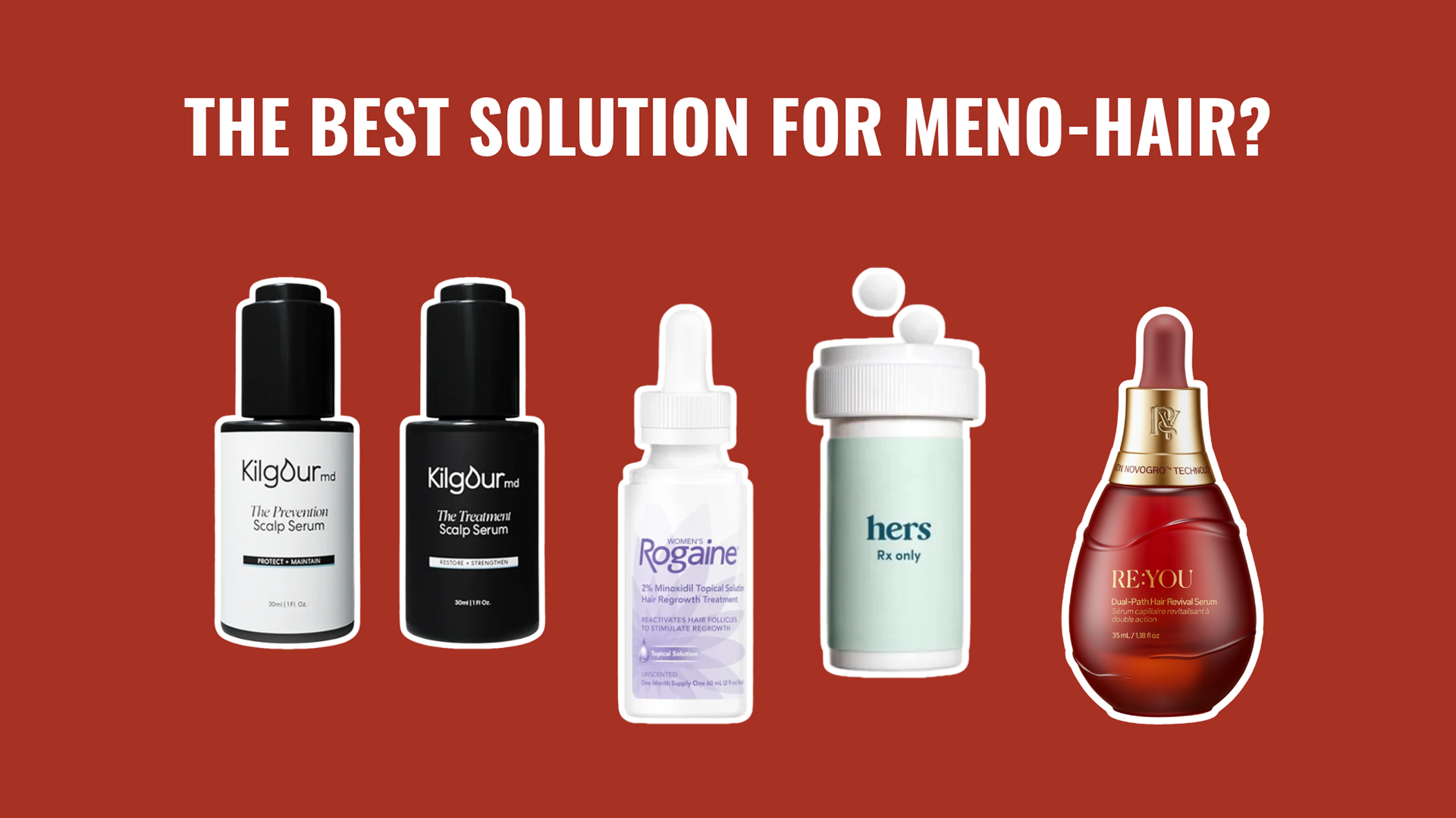
We did a deep dive into the most popular hair solutions women are recommending, and determined which one we'd actually use for menopausal hair thinning →
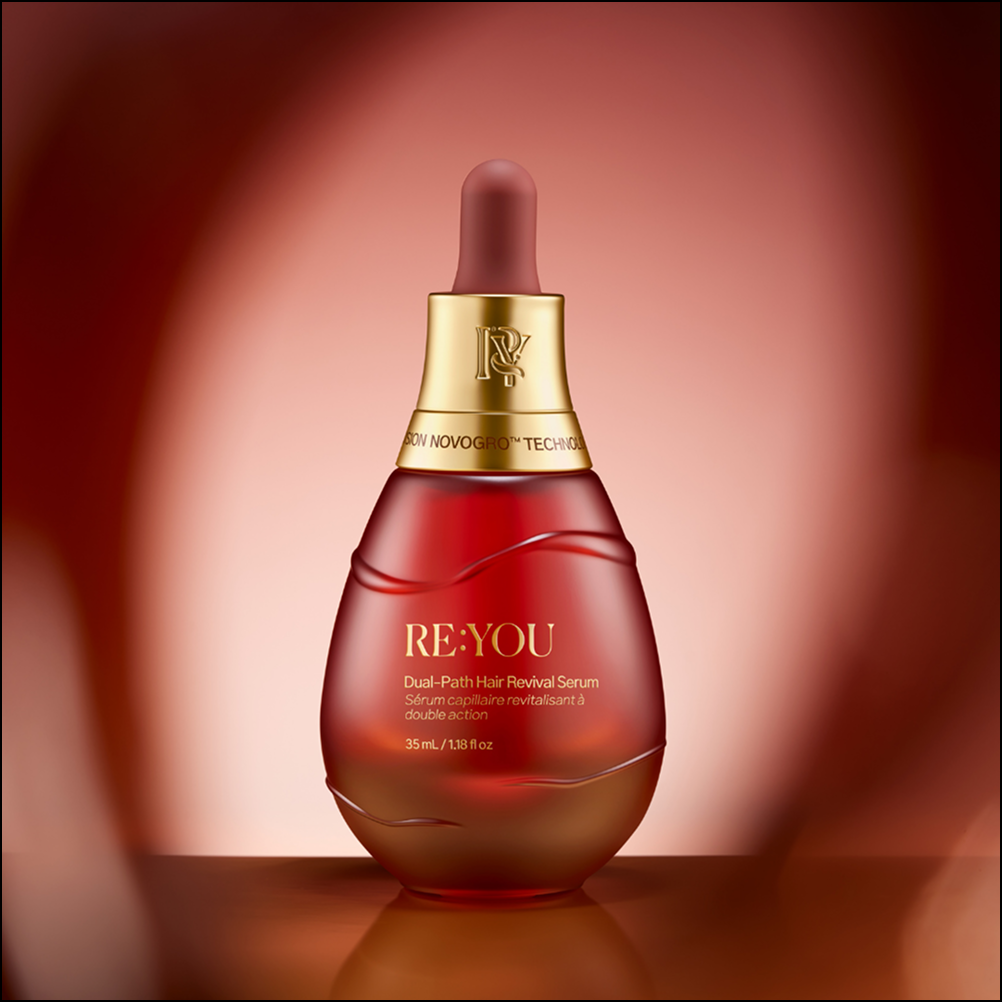
How it works: Directly supports dermal papilla cells in the hair follicle and the surrounding scalp environment | Drug-free and hormone-free: Yes | Daily routine: One dropper, once a day | Proof of efficacy: 190-person, double-blind clinical trial against topical minoxidil
To be honest: a serum was the last thing we expected to land on top, but RE:YOU stands out because it's built around the root cause of menopausal hair thinning and shedding. RE:YOU's team of PhD scientists screened roughly 20 million molecules, and developed three new molecules that directly support the hair follicle system:
- NOVOGRO™-623 and NOVOGRO™-624 energize and revitalize the dermal papilla cells.
- NOVOGRO™-273 restores the scalp environment, supporting proper oxygen and nutrient flow to the follicle.
And to prove its efficacy, RE:YOU ran a clinical trial against topical minoxidil, the current gold standard treatment for hair thinning and the solution you've likely heard about the most (more on that below). The study was double-blinded and included 190 women aged 35 to 70 with visible thinning — perfectly capturing the age range when women typically enter menopause.
At the 90-day checkpoint, the study measured:
- 50% more hair growth than minoxidil (measured by machine)
- 97% of participants saw less shedding (measured by comb test)
- 89% of participants reported improved hair appearance (self-reported)
These results are an exciting example of what can be achieved when you apply rigorous science to the beauty and wellness industry. Plus, this product fits well into this stage of our life: no drugs or hormones that can further impact your internal systems, and it's compatible with all hair types and products so you're not changing the routine you already have.
TBB TLDRThe only option here built around the root cause of menopausal hair thinning, outperformed minoxidil in the most rigorous clinical trial in the category, and works with any hair type and routine. And one more thing we love: RE:YOU was made by women, for women.
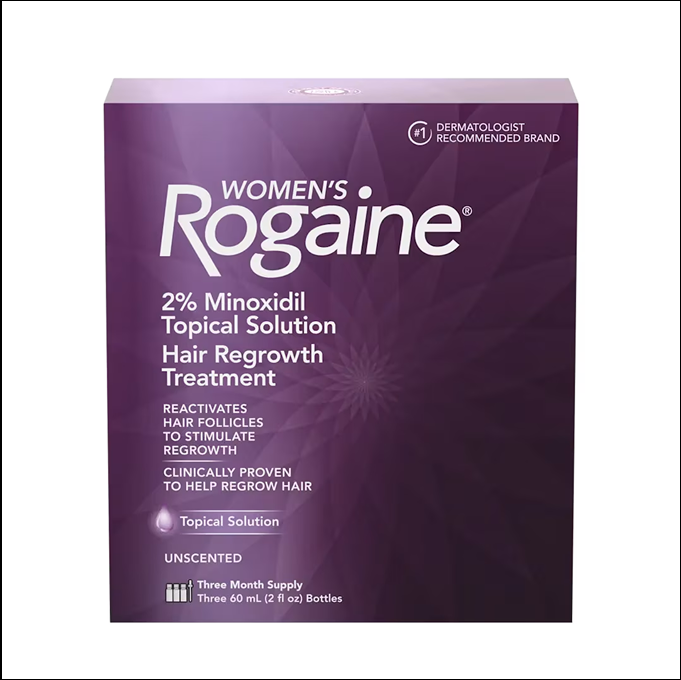
How it works: Widens blood vessels and boosts blood in the scalp; improves nutrient and blood flow towards hair follicles | Drug-free and hormone-free: No (OTC drug) | Daily routine: Apply twice a day, allow 3–4 hours to fully absorb into the scalp, keep away from pets | Proof of efficacy: FDA-approved for hair thinning
Hair Science: Why Topical Minoxidil Might Not Work for You
Topical minoxidil needs to be "turned on" by an enzyme produced in your hair follicles and some people simply don't produce enough. If you've tried topical minoxidil and it didn't work for you, that could be why.
This is the one your doctor will mention first, and for good reason: it's currently the only FDA-approved treatment for female pattern hair loss. But when you ask women who've actually used it, the same complaints come up:
It comes with several side effects. The most notable ones include the dread shed (the initial period of shedding that occurs when you start using minoxidil), scalp irritation, and toxicity to pets.
It's high maintenance. You apply it twice a day and it requires a few hours to fully absorb into your skin; it can leave your hair greasy, flat or crunchy, make styling a mess, and rub off on your pillow at night. Plenty of women quit because it doesn't fit their routine, not because it wasn't working.
The effects disappear once you stop. The warning is on the label, but many people don't realize that once you stop using minoxidil, the shedding comes right back, as if you were never using the drug in the first place.
TBB TLDRFDA-approved, but comes with a list of side effects, won't work for some people, and the results you do see only last as long as you keep applying it.
How it works: Processed by your liver and circulated through your bloodstream; widens blood vessels, including those in the scalp, to improve blood flow and nutrients to hair follicles | Drug-free and hormone-free: No (prescription drug) | Daily routine: Oral pill once a day | Proof of efficacy: Clinical studies show similar results as topical minoxidil
Hers is the most popular and top rated oral minoxidil option right now and if you've browsed channels like r/femalehairloss and r/menopause, you've seen that oral minoxidil is the one many women swear by. In clinical tests, it worked just as well as topical minoxidil, but for many, the oral pill is an easier fit for their routine. That being said, oral minoxidil comes with its own unique side effects:
It's a prescription drug. Oral minoxidil originated as a blood pressure medication, and hair growth happened to be a side effect. Doctors usually check your heart history before prescribing because it can increase your heart rate.
It can cause unwanted hair growth. When taken orally, minoxidil travels through your whole body, and can wake up hair everywhere (upper lip, chin, legs, etc.) — not just the hair on your head.
The effects disappear once you stop. Just like the topical version, once you stop taking minoxidil pills, the shedding comes right back, as if you were never using it in the first place.
TBB TLDRIt works for many women. But it's a prescription you take for as long as you want results, and its top side effect is more hair in unwanted places.
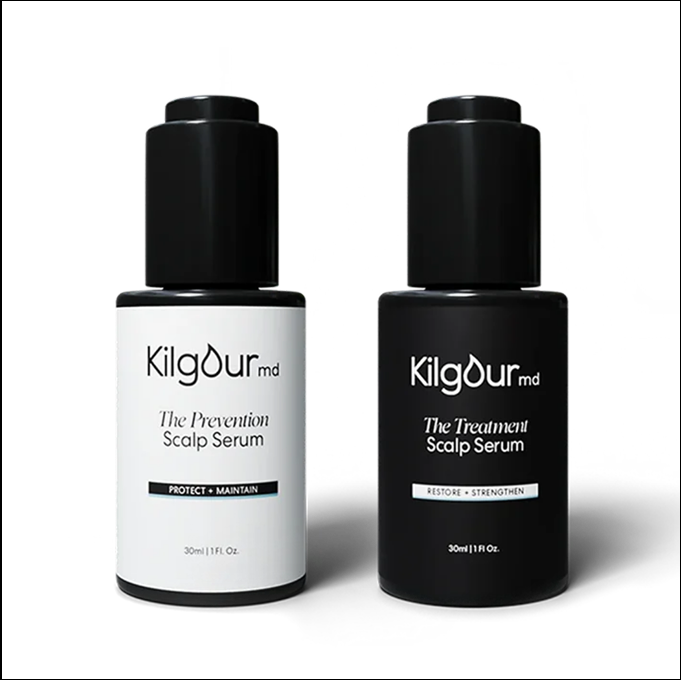
How it works: Botanicals and peptide complexes protect the scalp, and energize cells in the hair follicle | Drug-free and hormone-free: Yes | Daily routine: Two serums, apply both once a day | Proof of efficacy: Clinical study
KilgourMD is another new serum that's been showing up all over social media. It was started by a Stanford-trained dermatologist, it's drug and hormone free, and directed towards women in menopause.
While most serums are a single bottle, KilgourMD splits the routine into two — a "Prevention" serum that protects the scalp, and a "Treatment" serum that targets the root cause of hair thinning. The double bottle routine makes KilgourMD one of the most expensive solutions on the market (about $150 for both).
Our main hold up with KilgourMD is that it's not suited for every routine. It's known to turn blonde and grey hair brassy — a tough trade-off at the stage where many of us start going grey. Also, our team noticed that the serum is much thicker and cloudy than what seems to be advertised online, and can cause residue buildup between wash days.
TBB TLDRWeakest proof of efficacy on this list, a two-step nightly routine with a premium price tag, not compatible with all hair types and routines.
The Takeaways
Meno-hair is real, and "just deal with it" was never your only option.
Minoxidil delivers real results — that's why it's been known as the gold standard for so long — but it comes with side effects that not everyone can tolerate. Serums like KilgourMD and RE:YOU are both newcomers intentionally built to challenge minoxidil's legacy, but the one we're rooting for is RE:YOU.
RE:YOU is the one option here that targets the follicle system affected by menopause. It's clinically proven to outperform minoxidil, and it fits into the routine you already have. It's worth a try, and if you don't see a difference after 90 days, you can get your money back.