My Hair Started Shedding After GLP-1 Weight Loss. Here’s What I Did to Support Recovery
By Charlotte William
Share:
Published Aug 13, 2026 · Reviews
When I started finding more hair in the shower, I assumed the shedding had started that week. I eventually learned that the change may have begun months earlier. That delay shaped what I did next: I addressed what was happening in my body first, then added a scalp serum powered by proprietary molecules as follicle-side support while visible density caught up.
First: what may be causing it
The medication may be part of the story, but the changes around it matter too.
Hair loss was reported more often in people taking Wegovy or Zepbound than in people taking a placebo. The trials show that shedding happened; they do not establish why it happened. Both prescribing documents note that the hair-loss events were associated with weight reduction, but that does not separate the possible effects of the medication, the speed of weight loss, reduced food intake, or a combination of them.
That meant I could not decide on the cause before looking at my own timeline. Starting a GLP-1 had changed my appetite, the size of my meals, and the speed of my weight loss. Those were the concrete changes I needed to examine next.
What can happen next
When the body has less coming in, hair growth can be put on hold.
Hair is always being made, and that takes energy. When food intake drops sharply or weight falls quickly, the body reads that as physical stress. It keeps energy available for essential work, while something less urgent (such as growing hair) can temporarily receive less support.
This does not mean the follicle is dead. It can simply leave active growth earlier than usual. The same kind of shedding has long been seen after rapid weight loss without a GLP-1, including after bariatric surgery. That is why the weight-loss process matters, not only the name of the medication.
GLP-1 can also make it harder to eat enough. When meals get smaller, total calories and protein often fall first, and some people may develop a real vitamin or mineral deficiency as well. Both can add another strain on hair growth.
Rapid weight loss and eating too little can both begin early in treatment. The confusing part is that the hair does not fall the moment a follicle responds.
Why the timing feels backward
The follicle changes phase before the hair falls.
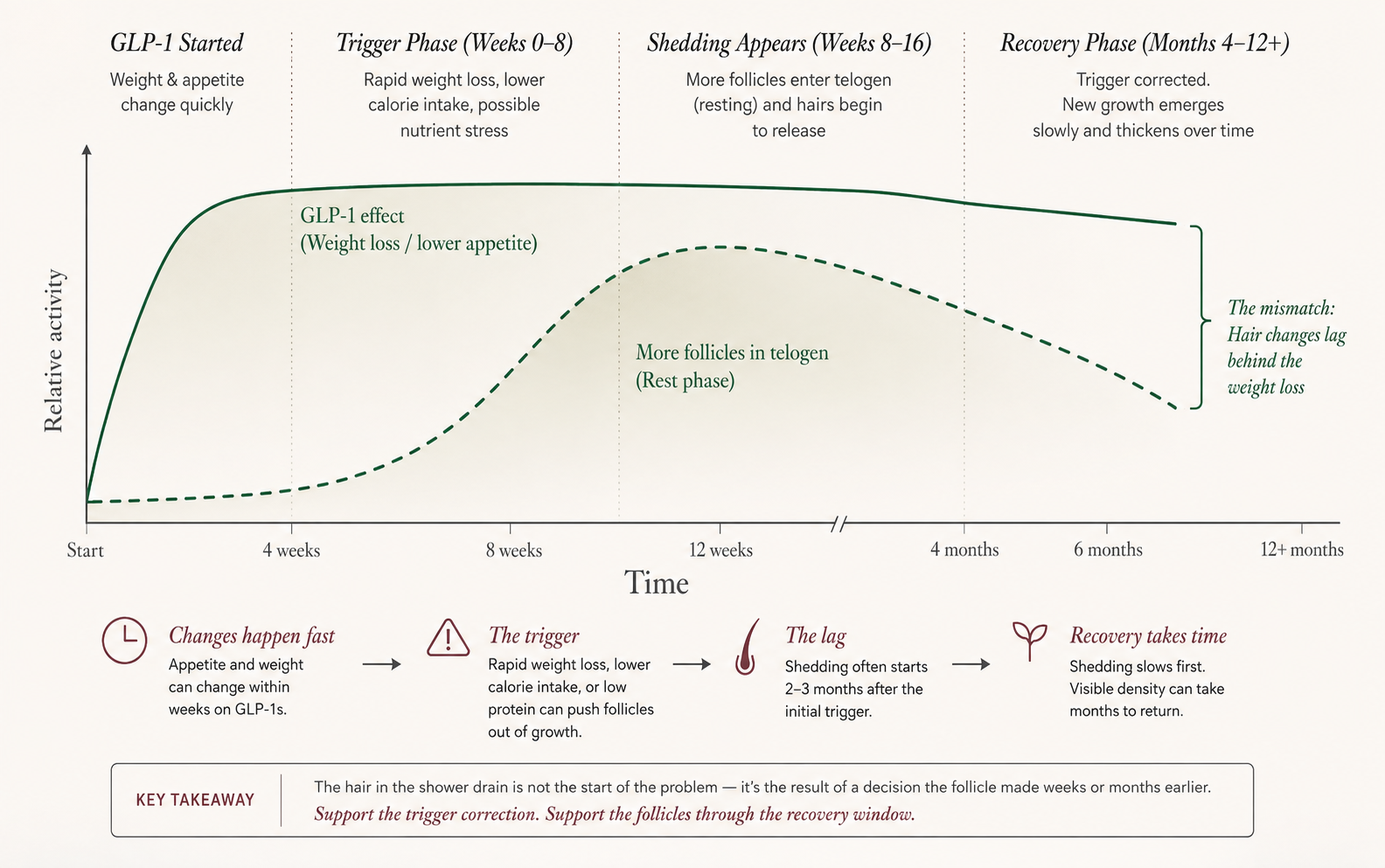
Hair grows in a loop. A follicle spends years actively making a strand; this is the growth phase, or anagen. It then moves through a short transition and into a resting phase called telogen, which commonly lasts two to three months. The old strand is released only after that rest. Because follicles normally follow different schedules, everyday shedding is spread out and easy to overlook.
Rapid weight loss or a sharp drop in food intake can push more follicles out of growth around the same time. Their hairs do not fall immediately. They stay in place while the follicles move through the resting phase, which means the important change has often happened well before the shower drain looks different.
When those follicles reach the end of rest together, the hairs can shed together, often two to three months after the original trigger. Falling is the last visible step, not the first. A change made today therefore cannot instantly alter hairs that are already near the end of that process.
The visible shedding can lag behind the original trigger, and visible density can lag behind biological recovery.
Once I saw the sequence, a heavy wash day stopped looking like a brand-new emergency. I looked backward instead: was my weight still falling very quickly, and was I eating enough? If either problem was still present, that was the first thing to address.
But fixing the original trigger and seeing density return do not happen at the same time. A follicle still has to begin another growth phase, form a new strand, bring it through the scalp, and grow it long enough to change what I see in the mirror.
So was I supposed to just wait?
Not exactly. Recovery could be supported from two sides.
No product could pull hairs already completing the shedding process back into growth. Supporting recovery meant doing two different jobs.
The body side
If my weight was still falling too quickly or I was struggling to eat enough, that came first. I reviewed the pace with my clinician, rebuilt a realistic food and protein routine, and checked a suspected deficiency instead of guessing.
The follicle side
Once the body side was steadier, my hair still needed time to look fuller. I wanted a topical designed to support the follicle while a new strand formed and gained enough length to become visible.
My choice of follicle-side support
That was where RE:YOU fit. It was not meant to replace food or protein, or to rescue hairs already at the end of the shedding process. I used it as my follicle-side step during the slower recovery window. Its focus on follicle biology fit that role, and the finished serum had clinical data on both shedding and density.
Why the mechanism made sense
It is designed for the part of recovery happening below the surface.
For density to return, a follicle has to resume active growth and produce a new strand that can keep growing. Dermal papilla cells at the base of the follicle help coordinate that process, including signals related to growth and strand thickness. Their surrounding tissue also matters because those cells need a supportive local environment to function.
RE:YOU’s three NOVOGRO™ molecules are designed around both parts of that system: supporting activity within the follicle and the environment around it. In practical terms, the goal is to support the follicle as it produces new growth, rather than make the existing hair look temporarily fuller.
Inside NOVOGRO™
Three molecules, divided between two biological jobs.
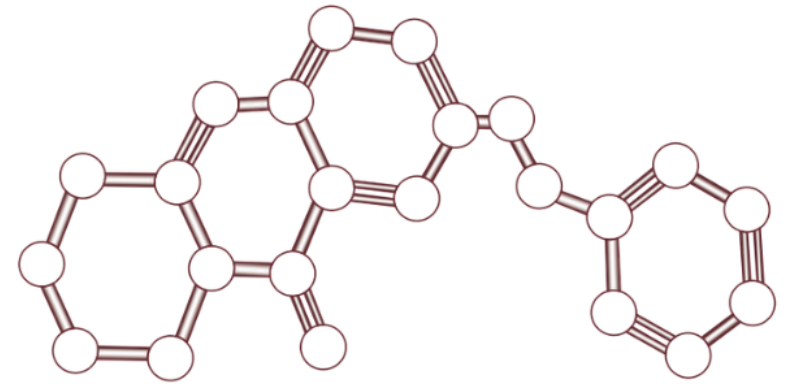
RE:YOU's discovery platform was screened roughly 20 million molecules before selected candidates were refined and evaluated in laboratory models, including human dermal papilla cells and 3D human hair-follicle organoids. The final three molecules were designed along two paths.
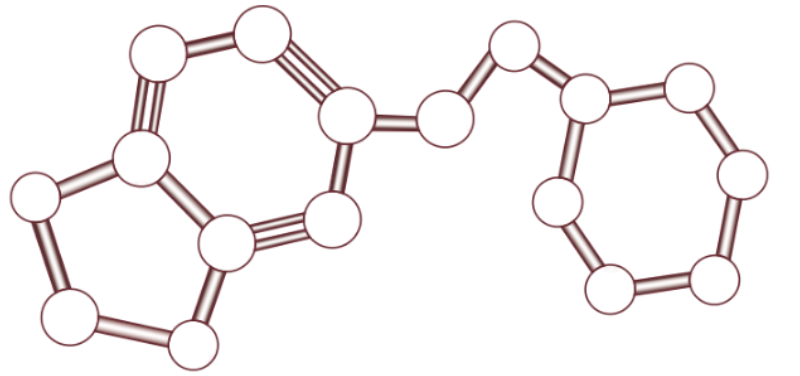
These two molecules were developed with a focus on dermal papilla cell health. Dermal papilla cells sit at the base of the follicle and help coordinate signals involved in the hair cycle, follicle size, and strand growth. In everyday terms, this is the pair aimed at the follicle’s command center.
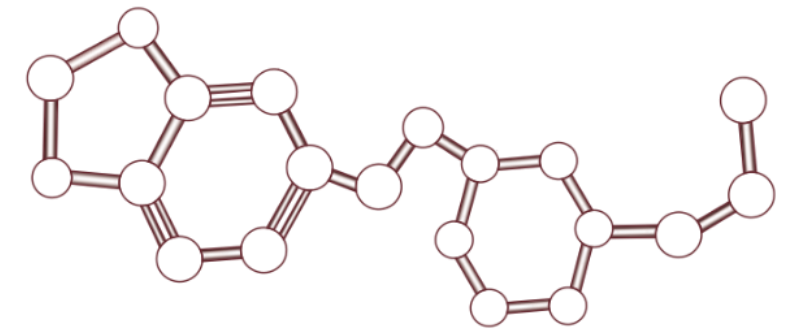
This molecule was developed around PHD2/HIF-1α signaling, a pathway involved in how cells respond to oxygen and nutrient needs. RE:YOU connects that pathway with signals related to vessel growth, nutrient delivery, and a healthier environment around the follicle.
What the laboratory work measured
+20%dermal papilla cell activity versus control
52%increase in growth-supporting signaling
+15%pro-growth factor production and cellular metabolism
Official molecule images, pathway descriptions, and laboratory figures are from RE:YOU’s science page →
The human evidence
The clinical data moved it from interesting to worth trying.
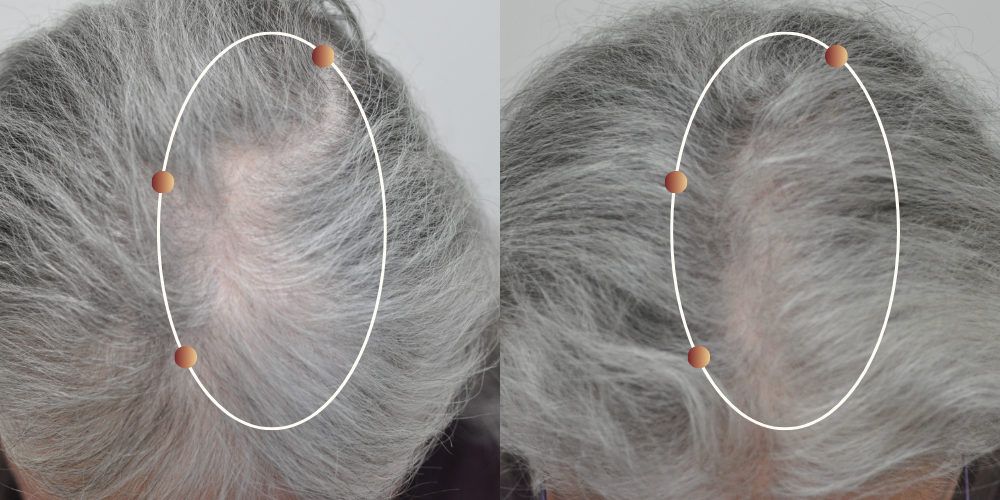
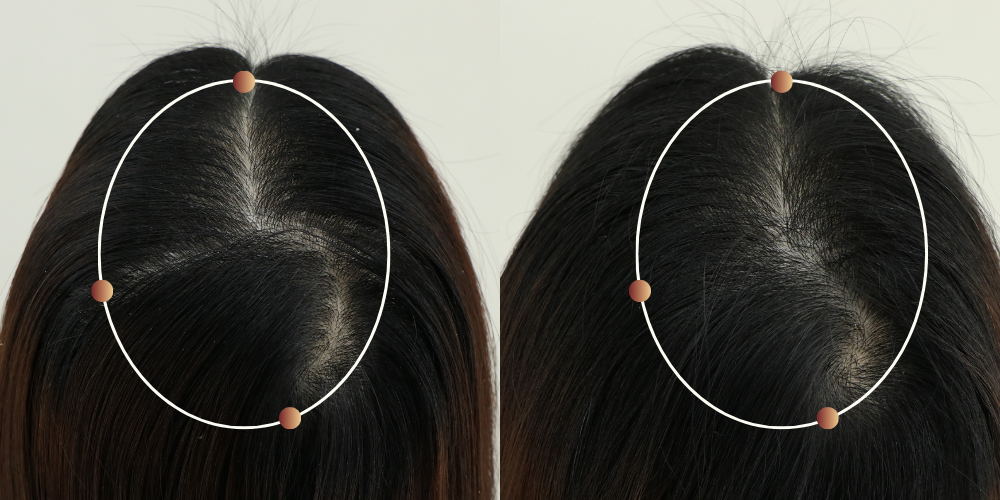
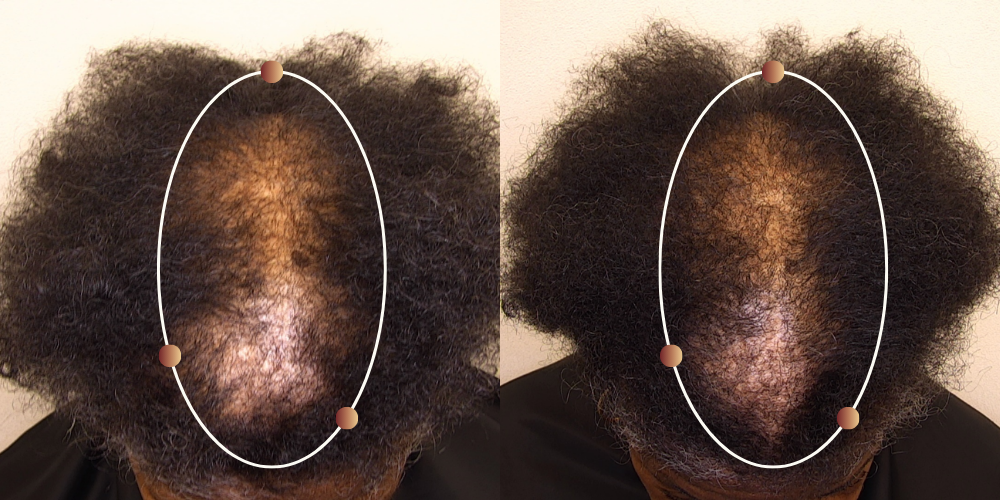
RE:YOU was clinically tested in a randomized, double-blinded trial involving 190 women with visible thinning, with minoxidil included as the active comparison. The study combined scalp imaging with measured shedding, expert assessment, and participant feedback.
58%
Decrease in measured hair loss after 90 days
19%
Increase in hair density after 90 days
90%
Reported thicker-looking hair after 90 days
Those outcomes match the two parts of the recovery gap that mattered to me: controlling excess shedding while supporting density as the hair cycle catches up.
BeforeDay 90
Crown
BeforeDay 90
Mid-scalp
BeforeDay 90
Diffuse thinning
Images and data from RE:YOU’s 90-day clinical study. Individual results vary.
I used one to two droppers on a dry scalp once daily and massaged it in for about 30 seconds. The water-based serum absorbed quickly and did not leave my part looking oily, which mattered because that was already the area I watched most closely.
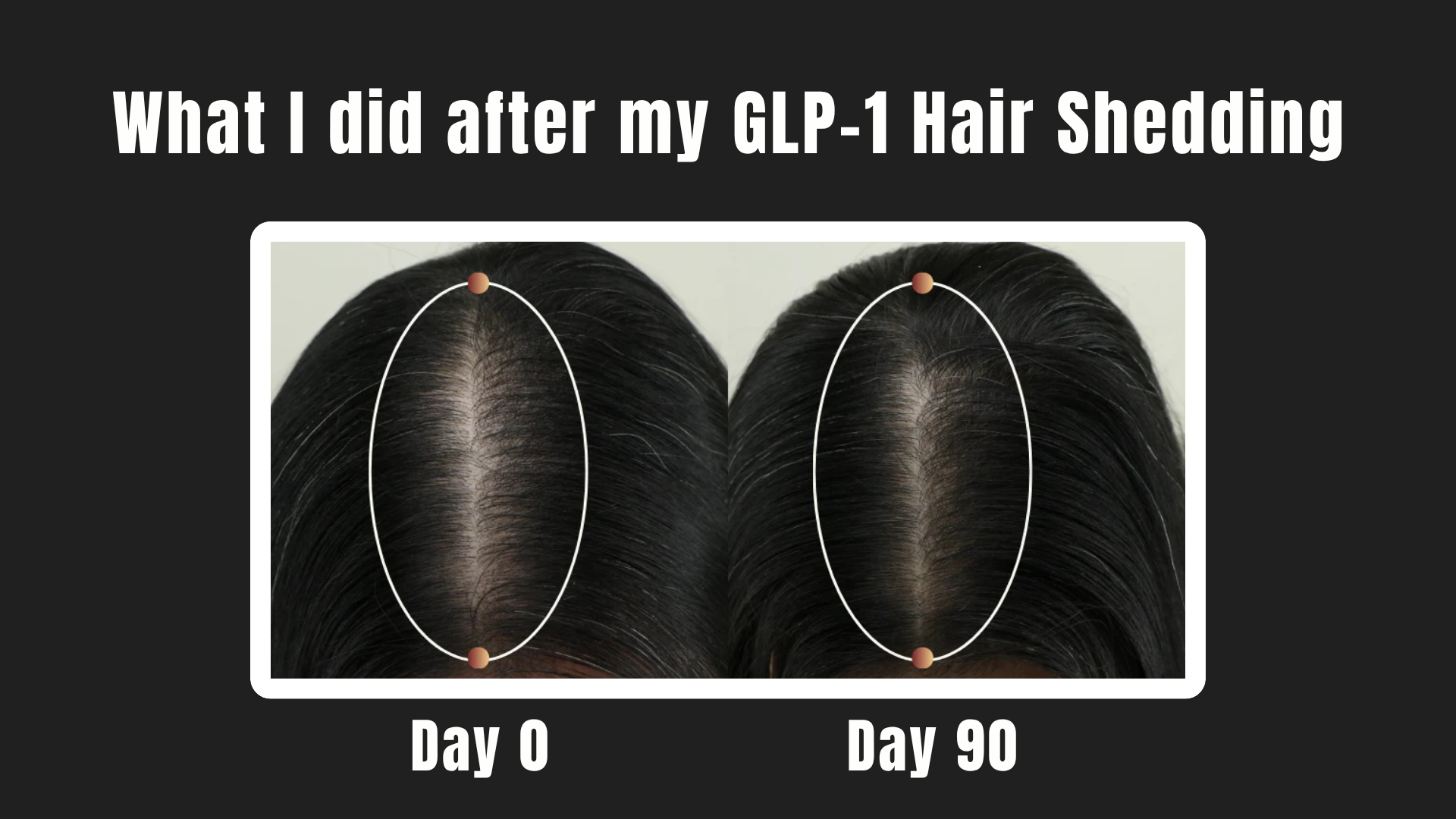
I took baseline photos in the same bathroom light and checked them monthly instead of trying to interpret every wash day. By the end of the 90-day window, the drain felt less alarming and short regrowth along my part was easier to see. I kept using RE:YOU after the initial trial because the routine was simple and the progress looked gradual rather than cosmetic.
Hair shedding can improve as its original trigger settles, so I would not claim that one serum acted alone. What I can say is that RE:YOU was the follicle-side step I used consistently throughout recovery, and the experience matched the reason I chose it: to support density while the hair cycle caught up.
My final verdict
Yes, I would buy RE:YOU again.
The reason is simpler now than it was when I started. I know exactly what I am buying: a non-drug, follicle-focused serum meant for consistent use, not a product that has to create a dramatic moment to feel worthwhile. RE:YOU has a clear place in my hair care, and that clarity is what makes it worth repurchasing.
Can a serum stop hairs that have already entered the shedding process?
That is not a realistic expectation. A strand released today may have left active growth weeks earlier. The more useful questions are whether the original trigger is still present and what role, if any, a topical could play during the next growth cycle.
How long can density take to look normal again?
There is no single deadline. Shedding often settles over months after the trigger is removed, while visibly meaningful density can take longer because replacement hairs must emerge and gain length. A dermatologist can reassess if the trend is not improving or the pattern does not fit TE.
Should I stop my GLP-1 because of shedding?
Not without speaking to the clinician who prescribed it. They can weigh the shedding against the reason for treatment and review whether the pace of weight loss, intake, or another medical issue needs attention.
When should I see a dermatologist?
Seek an evaluation for patchy loss, scalp pain or inflammation, obvious pattern thinning, loss of brows or lashes, or shedding that remains heavy without a clear recovery trend. Those details can point away from uncomplicated acute TE.